What a top-up to R-50 includes
- Depth measured in several spots before we start, not just at the hatch
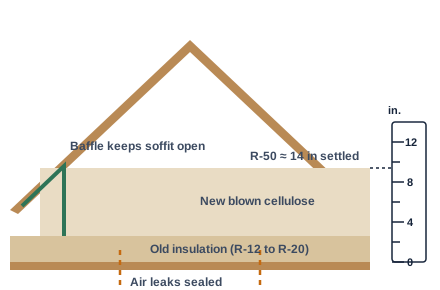
- Cardboard baffles at every eave bay that needs one, counted on your quote
- Air sealing at top plates, plumbing stacks, wires and light boxes
- Blown cellulose or fiberglass to the target depth across the full attic
- Depth rulers placed and photographed after install
- Hatch insulated and weatherstripped
Cellulose vs blown fiberglass
| Blown cellulose | Blown fiberglass | |
|---|---|---|
| R-value per inch (settled) | ≈ R-3.5 to R-3.8 | ≈ R-2.5 to R-2.9 |
| Depth for R-50 | ≈ 14 in | ≈ 18–20 in |
| Bags for 1,500 sq ft at R-50 | ≈ 86 bags | ≈ 38 bags |
| Weight on ceiling | Heavier | Lighter |
| Air movement through layer | Lower (denser) | Higher |
| Moisture | Absorbs, dries if ventilated | Does not absorb |
| Made from | Recycled paper, borate-treated | Spun glass |
Values vary by manufacturer; we follow the coverage chart printed on the bag for your target R-value.
Why R-50?
R-50 is the common retrofit target for Ontario attics and the level the province's standalone attic rebate has been built around. Many GTA homes built before the 1990s have R-12 to R-20. Going from R-12 to R-50 cuts heat loss through the ceiling by roughly three quarters. See our R-value guide.
Insulation alone is not the whole job
Blowing insulation over blocked soffit vents traps moisture against the roof deck. That is how attics end up with frost, mould and ice dams a few winters later. Baffles and air sealing go in before the insulation, and we photograph them so you can see they're there. More on ventilation and air sealing.
Blown-in insulation FAQ
Cellulose or fiberglass: which is better for a Toronto attic?
Both reach R-50. Cellulose is denser, resists air movement through the insulation layer better and reaches R-50 at about 14 inches. Blown fiberglass is lighter, does not absorb moisture, and needs roughly 18–20 inches for R-50. We recommend based on your attic's ventilation, access and any moisture history.
Can you blow new insulation over old insulation?
Yes, if the old insulation is dry, clean and free of mold, pests and vermiculite. That is what a top-up is. If it is wet, contaminated or compressed, we recommend removal first.
Will blown-in insulation settle?
Cellulose settles a little after install. We blow to the manufacturer's installed depth so the settled depth still meets R-50, and we leave depth markers so you can check.
Is blown-in cellulose safe?
Cellulose is recycled paper treated with borate fire retardant. It is one of the most common attic insulations in Canada. We wear respirators during install and seal off the work area inside your home.